Skip to content

Educational reference only (Canada & US). Natural health product & supplement statements have not been evaluated as medical advice by Health Canada or the U.S. FDA and are not intended to diagnose, treat, cure, or prevent disease.

Language switched to English
HerbAlly
Back to Herbs

This information is for educational purposes only and is not a substitute for professional medical advice, diagnosis, or treatment. Always consult your healthcare provider before using herbs, especially if you are pregnant, nursing, taking medications, or have a medical condition.

Albizia Anthelmintica
Antimicrobial

Albizia Anthelmintica

Identity checked · 3 sources

Overall grade reflects the strongest cited indication — evidence varies by use, dose, and preparation, and only applies when the botanical is safe for use.

Safety at a glance

Pregnancy
Unknown — insufficient human data
Nursing
Unknown — insufficient human data
Children (<18)
Pediatric dosing not available — unvalidated
Drug interactions

No interactions recorded in our database

Not recommended in these cases

  • Pregnancy and breastfeeding (medical advice required)
  • cardiac conditions
  • liver disease
  • young children

A summary, not a complete list — check every medication you take with your pharmacist.

How to read the evidence and review labels

Source check: 3 sourcesEditorial compilationNot clinically reviewedEditorial policyLast updated: November 25, 2026Suggest an edit
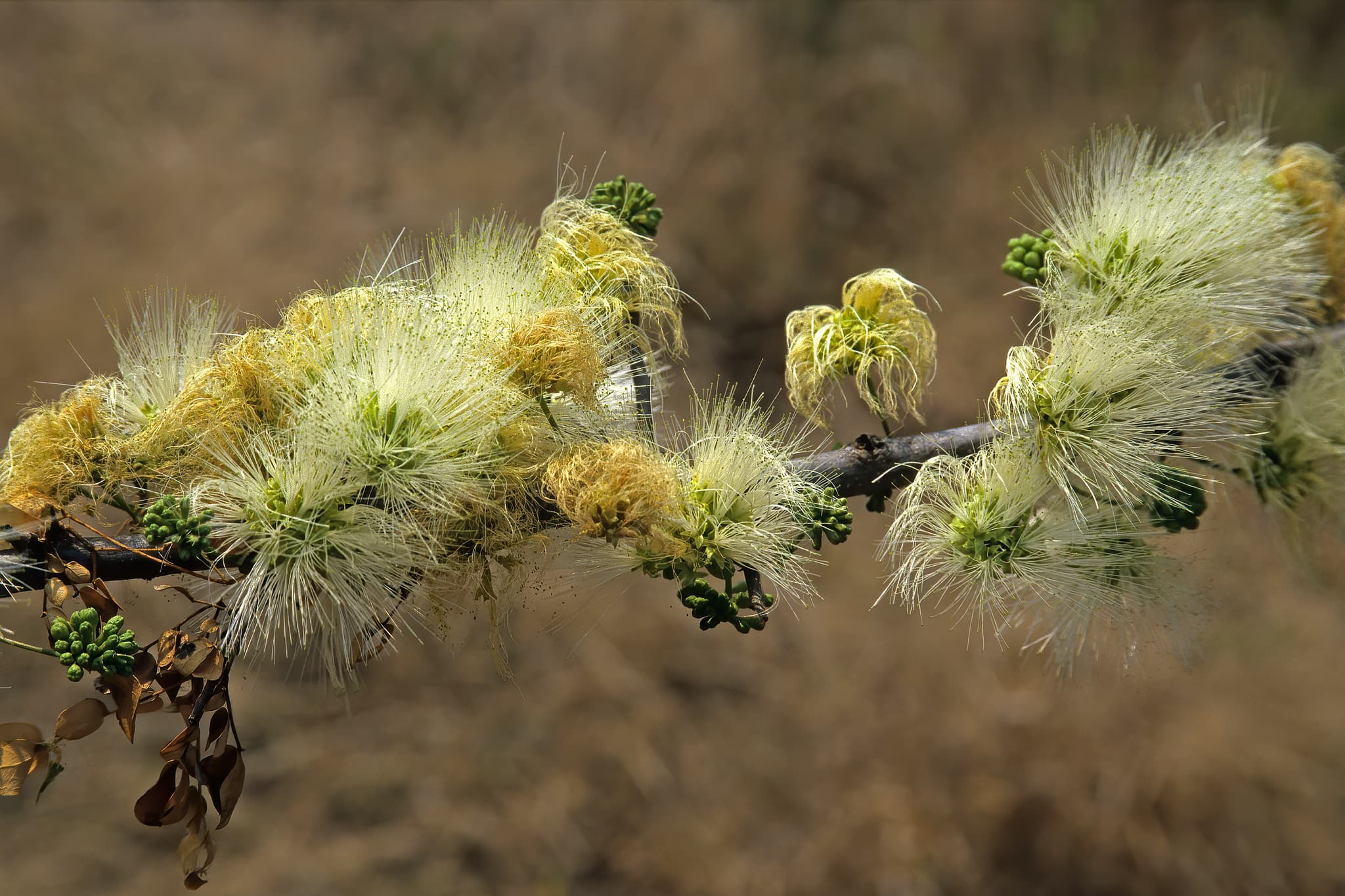
Albizia Anthelmintica — botanical photograph
SAplants · CC BY-SA 4.0 · via Wikimedia Commons

Albizia anthelmintica, a tree in the Fabaceae family, is native to East Africa, where pastoralists and smallholder farmers in Kenya, Tanzania, and Uganda have traditionally used its bark against intestinal worms in people and livestock. It is also traditionally recorded for fever, malaria, and wound healing, and has been cited in medicinal plant use by the Ilkisonko Maasai community in Kenya and in Botswana for perceived HIV/AIDS-associated opportunistic infections. The plant contains albizziin, alkaloids, saponins, and tannins, along with oleanane-type saponins and flavonoids such as quercetin and kaempferol glycosides.

Sources checked for this entry

1 independent source · Last checked 2026-11-25

Botanical identity confirmed via:

Cross-checked against these sources; where nothing was found, the page says so rather than filling the gap.

What the records say

Traditional and modern use

Traditionally Albizia Anthelmintica has been used for intestinal worms, fever, malaria and wound healing. Modern sources describe use in anthelmintic, antimicrobial and antipyretic.

Recorded dose

The sources record bark decoction 200ml single dose for worm treatment.

Safety

It is not considered safe in pregnancy on the evidence recorded here. Use while breastfeeding is likewise not advised. No curated drug interactions are currently listed below; absence from this table does not rule out interactions.

In the regulator's words

The source records state: “Pregnancy and breastfeeding (medical advice required)”, “cardiac conditions”, “liver disease” and “young children”.

Supplemental AI research summary · Not human-reviewed

Supplemental AI-compiled PubMed research summary (independent of top profile checks)

Separate from any top-of-page identity or regulatory source check, this supplemental section summarizes selected PubMed (NIH) abstracts using AI assistance and has NOT been human-reviewed. Verify claims directly in PubMed and consult a healthcare provider before use.

Compiled from 18 PubMed articles

Summary

Albizia anthelmintica is a plant species from the Mimosaceae/Fabaceae family used traditionally in East Africa for veterinary anthelmintic purposes and in various medicinal applications [PMID:14519324, PMID:18774230].

Background

Albizia anthelmintica Brong. belongs to the plant family Mimosaceae (also cited as Fabaceae) [PMID:14519324, PMID:18774230]. It is utilized by pastoralists and smallholder farmers in East Africa, particularly in Kenya, Uganda, and Tanzania [PMID:14519324, PMID:18774230, PMID:31877364].

Traditional uses

Traditionally used in East Africa to treat livestock against internal parasites [PMID:14519324, PMID:18774230]. It is also cited as a medicinal plant used by the Ilkisonko Maasai community in Kenya [PMID:26456346] and used in Botswana for the treatment of perceived HIV/AIDS-associated opportunistic infections [PMID:22632043].

Active compounds

The plant contains phenolics, terpenes, saponins, and alkaloids [PMID:23798881, PMID:38412461]. Specific isolated compounds include oleanane-type saponins [PMID:27450919], as well as flavonoids and galloyl glucosides such as quercetin-3-O-β-D-glucopyranoside, kaempferol-3-O-β-D-glucopyranoside, kaempferol-3-O-(6β-O-galloyl-β-D-glucopyranoside), and quercetin-3-O-(6β-O-galloyl-β-D-glucopyranoside) [PMID:23798881, PMID:33530540].

Mechanism of action

In silico molecular docking suggests that major compounds in the leaf extract interact with COX-1, COX-2, and 5-LOX enzymes involved in the inflammation cascade [PMID:31029001]. In gastric ulcer models, the extract reduced levels of IKκB, NF-κB, TNF-α, IL-6, iNOS, and lipid peroxidation while increasing glutathione peroxidase (GPx) and reduced glutathione (GSH) [PMID:33530540].

Clinical evidence

Provisional grades: study grades in unreviewed AI-compiled drafts may reflect preclinical or review papers until human-reviewed.

Preclinical (animal)Study grade BGastrointestinal nematodes (Livestock)

Water extracts of bark showed significant reductions in H. contortus (sheep) and H. polygyrus (mice) [PMID:14519324]; efficacy against mixed natural sheep helminthosis was 89.8% [PMID:15036460]; and 95.5% efficacy was observed against Fasciola gigantica in goats [PMID:10904170].

Preclinical (animal)Inflammation and Pain (Animal Models)

Leaf methanol extract significantly reduced carrageenan-induced hind paw edema and leukocyte migration in rats/mice, and decreased acetic acid-induced writhes [PMID:31029001].

Preclinical (animal)Gastric Ulcers (Animal Model)

Pretreatment with leaf extract (100 and 200 mg/kg) prevented gastric lesions by 87.4% and 92.3% respectively in indomethacin-induced ulcer rats [PMID:33530540].

Laboratory (in vitro)Candida albicans (In vitro)

Aqueous methanolic extracts of root barks showed strong anti-Candida activity [PMID:16571139].

Preclinical (animal)Pyrexia (Animal Model)

Leaf extract showed substantial antipyretic activity by decreasing elevated rectal temperature in mice [PMID:31029001].

Safety & adverse effects

In a study of sheep treated with plant preparations, two out of 45 animals suffered from transient bloat, which was relieved by a surfactant [PMID:14519324].

Evidence summary

Evidence is primarily based on veterinary clinical trials (B) and in vivo/in vitro animal and laboratory studies (D). There are no human clinical trials provided.

PubMed sources

  1. 1.PMID: 23798881 (2013) — Secondary metabolites and bioactivities of Albizia anthelmintica. · Pharmacognosy research
  2. 2.PMID: 14519324 (2003) — The anthelmintic efficacy of the plant, Albizia anthelmintica, against the nematode parasites Haemonchus contortus of sheep and Heligmosomoides polygyrus of mice. · Veterinary parasitology
  3. 3.PMID: 38412461 (2024) — A comparative untargeted metabolomic analysis and assessment of antiplasmodial potential of nine Albizia species. · Archiv der Pharmazie
  4. 4.PMID: 27450919 (2016) — Cytotoxic Oleanane-Type Saponins from the Leaves of Albizia anthelmintica Brongn. · Chemistry & biodiversity
  5. 5.PMID: 31029001 (2019) — Albizia anthelmintica: HPLC-MS/MS profiling and in vivo anti-inflammatory, pain killing and antipyretic activities of its leaf extract. · Biomedicine & pharmacotherapy = Biomedecine & pharmacotherapie
  6. 6.PMID: 33530540 (2021) — Gastro-Protective Effects of Albizia anthelmintica Leaf Extract on Indomethacin-Induced Gastric Ulcer in Wistar Rats: In Silico and In Vivo Studies. · Antioxidants (Basel, Switzerland)
  7. 7.PMID: 18774230 (2008) — Anthelmintic efficacy and dose determination of Albizia anthelmintica against gastrointestinal nematodes in naturally infected Ugandan sheep. · Veterinary parasitology
  8. 8.PMID: 37880735 (2023) — Medicinal plants for treatment of diarrhoeal diseases among under-five children: experience from traditional healers in North-eastern Tanzania. · BMC complementary medicine and therapies
  9. 9.PMID: 33913023 (2021) — In vitro efficacy of plant extracts against gastrointestinal nematodes in goats. · Tropical animal health and production
  10. 10.PMID: 31877364 (2020) — DNA barcoding augments conventional methods for identification of medicinal plant species traded at Tanzanian markets. · Journal of ethnopharmacology
  11. 11.PMID: 16571139 (2006) — Screening of Tanzanian medicinal plants for anti-Candida activity. · BMC complementary and alternative medicine
  12. 12.PMID: 40275311 (2025) — Medicinal plants trade in Harare's urban markets: diversity, conservation status, and economic significance. · Journal of ethnobiology and ethnomedicine
  13. 13.PMID: 26322770 (2015) — Efficacy of aqueous plant extract in disinfecting water of different physicochemical properties. · Journal of water and health
  14. 14.PMID: 10904170 (2000) — Fasciolicidal efficacy of Albizia anthelmintica and Balanites aegyptiaca compared with albendazole. · Journal of ethnopharmacology
  15. 15.PMID: 15036460 (2004) — Efficacy of Myrsine africana, Albizia anthelmintica and Hilderbrantia sepalosa herbal remedies against mixed natural sheep helminthosis in Samburu district, Kenya. · Journal of ethnopharmacology
  16. 16.PMID: 26456346 (2015) — Ethnobotanical survey of food and medicinal plants of the Ilkisonko Maasai community in Kenya. · Journal of ethnopharmacology
  17. 17.PMID: 21349318 (2011) — Ethnobotanical study of anthelmintic and other medicinal plants traditionally used in Loitoktok district of Kenya. · Journal of ethnopharmacology
  18. 18.PMID: 22632043 (2012) — Determination of potentially toxic heavy metals in traditionally used medicinal plants for HIV/AIDS opportunistic infections in Ngamiland District in Northern Botswana. · Analytica chimica acta
Safety Information
Important safety considerations for this herb
Unknown — insufficient human data

Contraindications

  • Pregnancy and breastfeeding (medical advice required)
  • cardiac conditions
  • liver disease
  • young children

Possible Side Effects

  • nausea
  • vomiting
  • cardiac effects

Sources & Citations

  • PubMed · Albizia anthelmintica: HPLC-MS/MS profiling and in vivo anti-inflammatory, pain killing and antipyretic activities of its leaf extract. (2019)Source
  • PubMed · Gastro-Protective Effects of Albizia anthelmintica Leaf Extract on Indomethacin-Induced Gastric Ulcer in Wistar Rats: In Silico and In Vivo Studies. (2021)Source

Government sources

No direct NIH, EMA, or WHO monograph link is mapped for this herb yet. Use the official registry search links below to inspect primary regulatory records directly.

Frequently asked questions

What is Albizia Anthelmintica used for?

Intestinal worms. Wound healing. (Recorded from licensed-product and monograph sources: PubMed.)

What dose of Albizia Anthelmintica is used?

Bark decoction 200ml single dose for worm treatment. This is the labelled or monograph dose recorded for this entry, not a personal recommendation. (PubMed.)

Who should avoid Albizia Anthelmintica?

Pregnancy. Young children. Cardiac conditions. These cautions come from the product labels and monographs attached to this entry.

Where does this information about Albizia Anthelmintica come from?

This entry was cross-checked against: PubMed; NCBI Taxonomy; GBIF. Every claim on this page is attributed to one of those sources, and fields with no source are left blank rather than filled in.

Calculate a safe dose of Albizia Anthelmintica

Free adult monograph reference checker (18+ — unscaled adult reference doses).

Calculate Dose
Share:XFBin

The safety digest

One short email when a herb-drug interaction worth knowing about changes. No newsletter theatre, no daily drip. Unsubscribe in one click.

By subscribing you agree to receive HerbAlly's occasional safety digest. You can unsubscribe at any time.