Skip to content

Educational reference only (Canada & US). Natural health product & supplement statements have not been evaluated as medical advice by Health Canada or the U.S. FDA and are not intended to diagnose, treat, cure, or prevent disease.

Language switched to English
HerbAlly
Back to Herbs

This information is for educational purposes only and is not a substitute for professional medical advice, diagnosis, or treatment. Always consult your healthcare provider before using herbs, especially if you are pregnant, nursing, taking medications, or have a medical condition.

Dioscorea Dumetorum
Antimicrobial

Dioscorea Dumetorum

Source-checked · 2 sources

Overall grade reflects the strongest cited indication — evidence varies by use, dose, and preparation, and only applies when the botanical is safe for use.

Safety at a glance

Pregnancy
Not recommended (precautionary)
Nursing
Not recommended (precautionary)
Children (<18)
Pediatric dosing not available — unvalidated
Drug interactions

No interactions recorded in our database

Not recommended in these cases

  • Pregnancy and breastfeeding (medical advice required)
  • liver disease
  • raw consumption is toxic

A summary, not a complete list — check every medication you take with your pharmacist.

How to read the evidence and review labels

Source check: 2 sourcesEditorial compilationNot clinically reviewedEditorial policyLast updated: November 25, 2026Suggest an edit
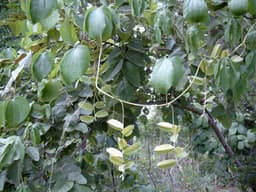
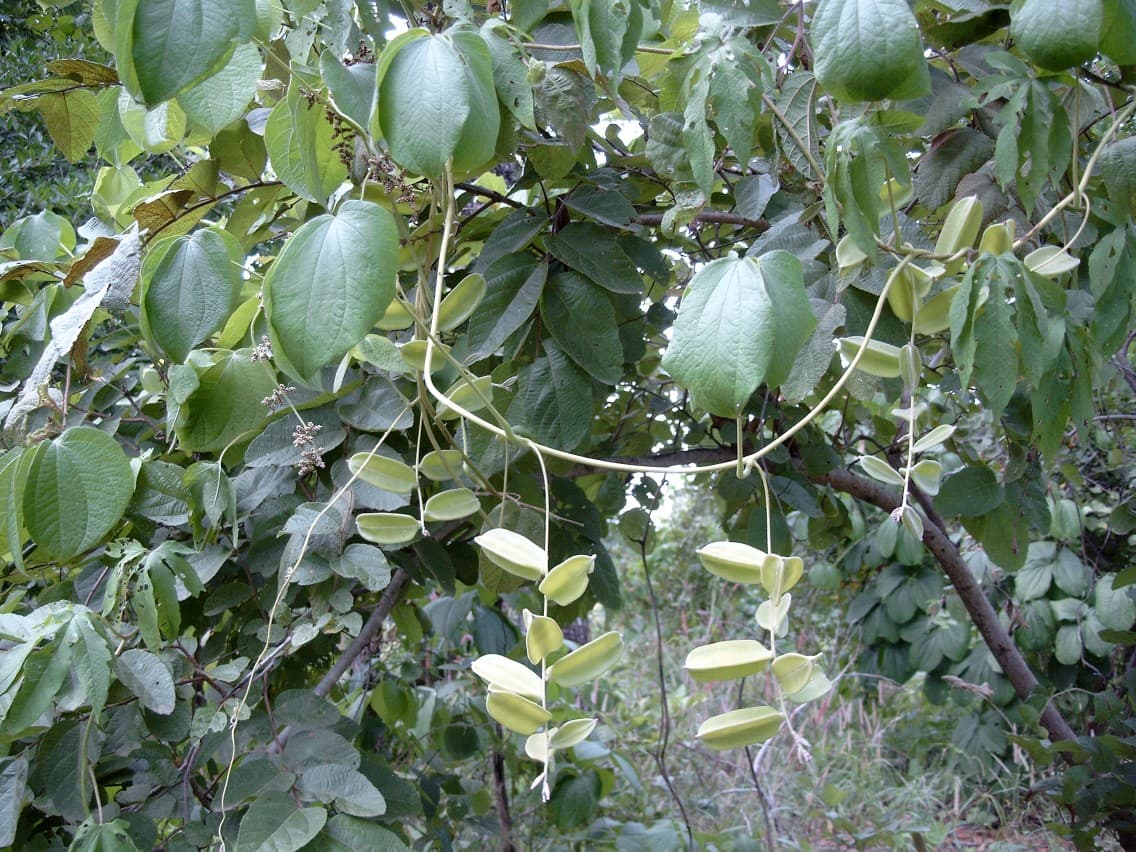
Dioscorea Dumetorum — botanical photograph
Marco Schmidt · CC BY-SA 2.5 · via Wikimedia Commons

Dioscorea dumetorum (Pax) is a wild yam species of the family Dioscoreaceae, native to tropical Africa, distinguished from related yams by its characteristically bitter taste and tri-lobed tubers. The tubers contain a distinct phytochemical profile relative to other Dioscorea species, with identified constituent classes including steroidal alkaloids (notably dioscorine-type compounds associated with toxicity), saponins, and phytoecdysteroids. A 2024 phytochemical investigation (PMID 38945493) isolated phytoecdysteroids from the tubers and evaluated their antioxidant and antidiabetic activities in vitro, providing preliminary laboratory-level pharmacological data. Traditional African systems of medicine have employed processed tubers for various purposes, though the species is classified among the toxic wild yams, and raw or inadequately processed material is considered unsafe. The bitterness and documented toxicity of crude tubers distinguish this species from the edible cultivated yams of the same genus, necessitating traditional detoxification processing methods prior to any therapeutic use. No human clinical trials establishing efficacy or safety were located in the verified sources; the evidence base consists primarily of laboratory and phytochemical characterization.

Sources checked for this entry

2 independent sources · Last checked 2026-11-25

Cross-checked against these sources; where nothing was found, the page says so rather than filling the gap.

What the records say

Traditional and modern use

Traditionally Dioscorea Dumetorum has been used for in traditional west african medicine, the processed tuber has been historically used for manageing symptoms associated with diabetes, a practice based on ethnobotanical tradition rather than clinical evidence, in african folk medicine, tuber preparations have been traditionally applied as analgesic agents for pain relief, traditional healers in tropical africa have historically used processed tuber material for its presumed antimicrobial properties in treating infections, in traditional practice, tuber preparations have been used for the reduction of fever and traditional processing methods (repeated soaking, boiling, and fermentation) have been historically employed to reduce the bitterness and toxicity of the tuber before medicinal or food use. Modern sources describe use in preliminary / limited evidence: a 2024 phytochemical study isolated phytoecdysteroids from the tubers and reported antioxidant and antidiabetic activities in in vitro assays; these findings are laboratory-based and do not establish clinical efficacy in humans (pmid 38945493), preliminary / limited evidence: phytoecdysteroid and saponin fractions have shown antimicrobial activity in preclinical assays, but no human clinical trials were located, explicitly not supported by human clinical evidence: no human clinical trials, cohort studies, or systematic reviews were identified that establish antidiabetic, analgesic, antimicrobial, or antipyretic efficacy of dioscorea dumetorum in humans, evidence status summary: the current evidence base is limited to phytochemical characterization, in vitro pharmacology, and ethnobotanical documentation; human therapeutic use remains unvalidated and safety context: because the crude tuber is classified as toxic among wild yam species, any therapeutic application requires verified detoxification processing; unprocessed use is not supported for any indication.

Recorded dose

The sources record 250–500mg standardized extract.

Safety

It is not considered safe in pregnancy on the evidence recorded here. Use while breastfeeding is likewise not advised. No curated drug interactions are currently listed below; absence from this table does not rule out interactions.

In the regulator's words

The source records state: “Pregnancy and breastfeeding (medical advice required)”, “liver disease” and “raw consumption is toxic”.

Supplemental AI research summary · Not human-reviewed

Supplemental AI-compiled PubMed research summary (independent of top profile checks)

Separate from any top-of-page identity or regulatory source check, this supplemental section summarizes selected PubMed (NIH) abstracts using AI assistance and has NOT been human-reviewed. Verify claims directly in PubMed and consult a healthcare provider before use.

Compiled from 7 PubMed articles

Summary

Dioscorea dumetorum, known as trifoliate or bitter yam, is a root crop cultivated in West and Central Africa with documented antidiabetic and antimalarial properties [PMID:38945493, PMID:41410906].

Background

Dioscorea dumetorum is a dioecious root crop and an 'orphan crop' primarily grown in regions such as Cameroon and Nigeria [PMID:36678940, PMID:32143301]. It is characterized by a genome of approximately 485 Mbp and a common chromosome number of 2n = 40 [PMID:32143301, PMID:36678940].

Traditional uses

It is used in Nigerian folkloric medicine as an antidiabetic plant [PMID:38945493] and has been claimed for use in folk medicine for the management of malaria [PMID:41410906].

Active compounds

Bioactive constituents include phytoecdysteroids such as 24-hydroxymuristerone A, 24-hydroxykaladasterone, and muristerone A [PMID:38945493]. Other isolated compounds include 2,2',7,7'-tetramethoxy-[1,1'-biphenanthrene]-4,4',6,6'-tetraol, batatasin I, dihydroresveratrol [PMID:38945493], dioscoretine [PMID:2392490], and protodioscin [PMID:41410906].

Mechanism of action

Ethyl acetate extracts of tubers and peels exhibit potent antioxidant activity correlating with high phenolic content [PMID:38945493]. Steroidal derivatives and the glycosidic portion of the tuber have demonstrated hypoglycemic activities [PMID:3713229].

Clinical evidence

Provisional grades: study grades in unreviewed AI-compiled drafts may reflect preclinical or review papers until human-reviewed.

Preclinical (animal)Diabetes

Hydroalcoholic extracts containing steroidal derivatives and the glycosidic portion evinced significant hypoglycemic activities in fasting normal mice and alloxan-diabetic rabbits [PMID:3713229]. Dioscoretine administered intra-peritoneally (20 mg/kg) produced significant hypoglycemic effects in normal and alloxan diabetic rabbits [PMID:2392490].

Preclinical (animal)Malaria

The n-butanol fraction (nBF) and sub-fraction CCF1 of tuber aqueous extracts demonstrated inhibition of parasite growth by 49.13% and 40.80% respectively in Plasmodium berghei-infected mice [PMID:41410906].

Safety & adverse effects

Ingestion of undercooked bitter yam can cause toxic encephalopathy, presenting as altered sensorium and convulsions [PMID:41048826]. Acute toxicity studies in mice for dioscoretine showed an LD50 of 0.58 g/kg, while the aqueous fraction had an LD50 of 1.4 g/kg [PMID:2392490].

Evidence summary

The current evidence is primarily based on animal models (mice and rabbits) and case reports, indicating a low overall strength of clinical evidence for human use.

PubMed sources

  1. 1.PMID: 38945493 (2024) — Phytoecdysteroids from Dioscorea dumetorum (Kunth) Pax. and their antioxidant and antidiabetic activities. · Fitoterapia
  2. 2.PMID: 36678940 (2023) — Sex Determination in Dioscorea dumetorum: Evidence of Heteromorphic Sex Chromosomes and Sex-Linked NORs. · Plants (Basel, Switzerland)
  3. 3.PMID: 32143301 (2020) — High Contiguity De Novo Genome Sequence Assembly of Trifoliate Yam (Dioscorea dumetorum) Using Long Read Sequencing. · Genes
  4. 4.PMID: 41410906 (2025) — n-Butanol Fraction of Dioscorea dumetorum Tuber Aqueous Extract Exhibited Potent Antimalarial Activity in Plasmodium berghei-infected Mice. · Acta parasitologica
  5. 5.PMID: 3713229 (1986) — Pharmacological evaluation of Dioscorea dumetorum tuber used in traditional antidiabetic therapy. · Journal of ethnopharmacology
  6. 6.PMID: 2392490 (1990) — Hypoglycaemic activity of dioscoretine from tubers of Dioscorea dumetorum in normal and alloxan diabetic rabbits. · Planta medica
  7. 7.PMID: 41048826 (2025) — Toxic Encephalopathy Following Undercooked Bitter Yam Ingestion in Two Patients in Ile-Ife, Nigeria: A Case Report. · Case reports in neurological medicine
Safety Information
Important safety considerations for this herb
Not recommended during pregnancy
Not recommended while nursing

Contraindications

  • Pregnancy and breastfeeding (medical advice required)
  • liver disease
  • raw consumption is toxic

Possible Side Effects

  • hepatotoxicity
  • hypoglycemia
  • nausea

Sources & Citations

  • PubMed · Phytoecdysteroids from Dioscorea dumetorum (Kunth) Pax. and their antioxidant and antidiabetic activities. (2024)Source
  • PubMed · Sex Determination in Dioscorea dumetorum: Evidence of Heteromorphic Sex Chromosomes and Sex-Linked NORs. (2023)Source

Government sources

No direct NIH, EMA, or WHO monograph link is mapped for this herb yet. Use the official registry search links below to inspect primary regulatory records directly.

Frequently asked questions

What is Dioscorea Dumetorum used for?

In traditional West African medicine, the processed tuber has been historically used for manageing symptoms associated with diabetes, a practice based on ethnobotanical tradition rather than clinical evidence. In African folk medicine, tuber preparations have been traditionally applied as analgesic agents for pain relief. Traditional healers in tropical Africa have historically used processed tuber material for its presumed antimicrobial properties in treating infections. (Recorded from licensed-product and monograph sources: PubMed; WHO Vol.3 (2007).)

What dose of Dioscorea Dumetorum is used?

250–500mg standardized extract. This is the labelled or monograph dose recorded for this entry, not a personal recommendation. (PubMed; WHO Vol.3 (2007).)

Who should avoid Dioscorea Dumetorum?

Pregnancy. Liver disease. Raw consumption is toxic. These cautions come from the product labels and monographs attached to this entry.

Where does this information about Dioscorea Dumetorum come from?

This entry was cross-checked against: PubMed; WHO Vol.3 (2007). Every claim on this page is attributed to one of those sources, and fields with no source are left blank rather than filled in.

Calculate a safe dose of Dioscorea Dumetorum

Free adult monograph reference checker (18+ — unscaled adult reference doses).

Calculate Dose
Share:XFBin

The safety digest

One short email when a herb-drug interaction worth knowing about changes. No newsletter theatre, no daily drip. Unsubscribe in one click.

By subscribing you agree to receive HerbAlly's occasional safety digest. You can unsubscribe at any time.